• Skip to primary navigation
  • Skip to main content
  • Skip to footer

LB Physio

Stretch Strengthen and Stabilise

Facebook: LBPhysioShoreham
Instagram: LB_PhysioPilates

  • Home
  • About Us
  • Physio Services
    • Female Pelvic Health
    • Pre and Post Natal
    • Physiotherapy
    • Massage Therapy
    • Sports Injury
  • Resources
  • Online Booking
  • Contact Us
    • Contact Us
    • Prices
    • FAQ

Louise Brown

Why NHS physiotherapy isn’t working

22/03/2023 By Louise Brown

Lots of my patients come and see me because they’re tired of sitting on an NHS waiting list, sometimes they’ve already seen an NHS physio and came away disappointed.

(Before you get the wrong idea, I’m not about to bash the NHS, there was lots I loved about practising physio there!)

But the truth is, the system just isn’t working.

Being a physio in the NHS, you never get to work to your full potential. There are SO many rules to stick to day in, day out.

If you’ve ever seen an NHS physio then perhaps you’ve experienced that too?

Patient A can only see you for 30 minutes max…

Group patients B, C and D together in one session and give them one generic exercise programme to save some time and cut a cost…

Hand out these leaflets, they’ll bridge the gap wherever time’s lacking…

Follow up on the phone if necessary, and thou shalt NEVER give out thy personal phone number!!

It frequently felt like the care you can offer is out of your hands, and you’re never really able to give your patients your full skillset.

(Throw in the long waiting lists and it’s hardly surprising NHS physiotherapy has a bad rep.)

Since becoming a private practitioner, I’ve never looked back.

As private physios, we’re able to offer so much more: a totally bespoke approach, always face to face and you’ll enjoy some powerful accountability too!

Our in-depth introductory appointments always last an hour, you’ll get my mobile number so we can keep checking in, and we take follow-up appointments seriously too.

We’ll make sure you’re getting your exercises completely right, keep you accountable, and guide you through a versatile and totally tailored programme to make sure you see real improvement, exactly as it should be.

Let me know if you’ve got any niggles or an injury you want to finally sort out.

Louise x

Filed Under: Health

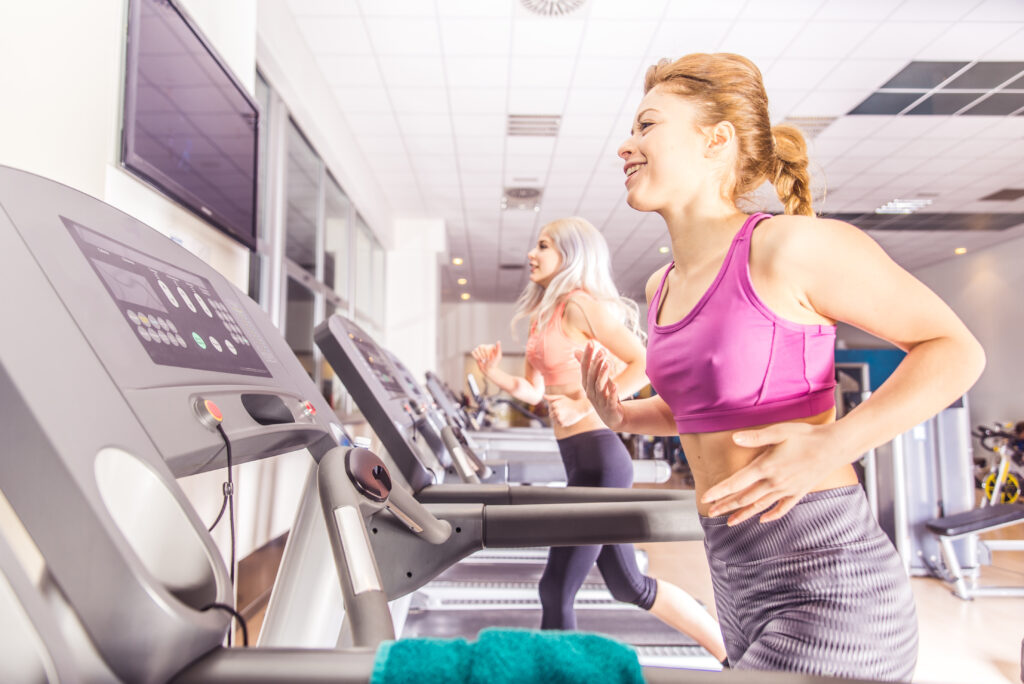
Is cardio really the best form of exercise for me?

15/03/2023 By Louise Brown

Anyone else felt that sense of anxiety the first time you went to the gym?

Between weights areas crowded with men and running machines maxed out with women churning out their miles, I didn’t know where to begin.

Thankfully, times have changed – and more people are recognising that everyone should have access to both cardio and resistance equipment. But why is that so important?

Being a Physio, I’m often asked:

“Which type of exercise is best
for me: cardio or resistance?”

My first answer is always the classic, that depends! The goals you set yourself will direct the sort of exercise you should do.

And in today’s busy society where we’re trying to get maximum effect for minimal time, making sure we select the right training program really does matter.

Now I think we both know there’s a LOT of information floating around the web telling you what’s best for you, and it can be super hard to sieve through it and make the right choices.

So if you’re hoping to change the way your body looks and feels, you might be wondering which is better: cardio exercise, or resistance. Let’s bust the myths.

Is cardio REALLY the best way to lose weight?

We all know getting out for a run is great for your cardiovascular health and can blow away the cobwebs, but as an efficient way to lose weight? Not so much.

It’s true that cardiovascular exercise like cycling or swimming, light jogging use up the energy stored in your fat cells. If you’ve got lots of time on your hands and you love these activities then these gentle forms of exercise form your ‘bread and butter’ for fat loss. BUT- they take a lot of time, I mean hours, to get the same results as other means of exercise.

So what are the alternatives? 

We now know that it’s the total fuel that your body uses during exercise that counts, so you want to achieve a higher fuel burn during your exercise session.

Doing this keeps the heart rate elevated both during AND after the exercise where it repairs, rebuilds and returns to pre-exercise state. So how can you do that? 

Increase your heart rate through higher intensity exercise

This works off your heart rate and the key is to elevate that heart rate for an interval of time. Whether that be with marching on the spot (beginner) or doing sprints up a hill (advanced) – it’ll be totally dependent on your fitness level.

Then you recover and let the heart rate come down again- before you repeat. 

Working at your upper limit like this
maximises the amount of energy you use.

This type of exercise can be done quickly – all you need is 15-20 mins to get results in both your fitness and fat loss. 

This could just mean that when you go out for a walk you walk really fast for 30 secs then slow down and recover before walking really fast again – it’s that simple. 

Increase your heart rate through resistance exercise (my favourite!)

I used to love going for a run or doing a spin class (well, I loved the feeling when it finished!) – but I used to end up exhausted, and I’d eat loads after the sessions and then the next day too, and my body felt tired for hours afterwards.

Then I discovered resistance training – using weights, machines and bands. And by doing exercise with these, my heart rate would stay up and I built muscle without becoming so exhausted.

My calorie burn is slightly less in a session now but my muscle mass is far higher than it ever was, meaning than I burn more energy at rest (because muscles need more energy than fat). I am also able to exercise more times a week, I eat less too because I don’t get as hungry as I used to after my spin classes and boy oh boy do I enjoy it far more!! 

New territory: the benefits of
switching to the weights machines

So I get it….this is new territory for lots of us who find comfort in those running machines and cross trainers, but through resistance training, you’ll:

  1. Build muscle strength and tone – protecting the joints from injury and raising your resting metabolic rate
  2. Improve your posture, flexibility and balance, helping you remain independent as you age
  3. Manage your weight and muscle-to-fat ratio better (your body burns more kilojoules as it rests) 
  4. Have more energy, which can improve your sleep quality at night too
  5. Feel better in and about yourself!

Right, shall we give this a go?!

Here’s a little fat burning tutorial video running you through some fantastic exercises, including some super handy resistance techniques. Grab your kit, click play and let’s raise our heart rates and burn some fat!

If you’d like to be kept accountable to your health and fitness with a tailored program that incorporates more resistance training, let me know.

If you need help with an injury or want a professional to check your technique, give me a call on 07809 440 505 or pop a message in the contact form below. And if you’re wondering where to start in terms of equipment, I’d invest in some thick resistance bands (you’ll find inexpensive sets all over the Internet – these are the ones I use).

Using bands to exercise will get your heart rate up so your cardiovascular system will be getting a workout too!

Filed Under: Health

What’s stopping you from achieving something amazing?

28/02/2023 By Louise Brown

I mentioned in a recent post that I’ve been doing some work on myself over the last year or two.

It hasn’t exactly been easy getting myself from an under-confident mum-of-two to “Superwoman Physio and Pilates Extraordinaire” (or something like that).

But there have been some HUGE learns along the way that I think can benefit everyone, wherever they’re at in life – you included.

Especially if you’re someone who’s guilty of delaying taking action…

Or trying to do everything in a perfectionist way…

That’s certainly where I used to be, busy worrying about doing things rather than actually doing them. So here’s what I asked myself, and I’d recommend you do the same if you recognise these feelings.

The simple strategy to get you
from action-delayer to action-slayer

Why haven’t you taken action yet?

What’s going through your head when you think about the task at hand?

Are you worried? Fearful? Not ready? Need more energy? Is the task just too big?

Our brains feed us stories like this all the time – it’s our job to present some evidence to the contrary.

So once you’ve gone through the reasons why you can’t achieve whatever your target is right now, try thinking about the ways in which you ARE ready instead.

Tell yourself exactly why you are already capable:

  • Remind yourself of the similar tasks you’ve completed previously
  • Remember all the hard things you’ve done in the past too
  • Be specific in the memories you focus on, that’s your evidence right there!

You might surprise yourself to find that the barriers your brain puts up aren’t actually viable.

Wherever you get to with this exercise, it’s not likely any of us will ever feel totally “ready” to get started on something new, even if we accept that we might be capable.

Shaking off perfectionism and throwing yourself in

Now this is where shaking off perfectionism comes in!

What if you just cracked on just where you are now, using whatever time you have available to yourself?

This is exactly how I’ve started writing these rambling blogs, sending out messy emails, posting imperfect videos of me with my hair scraped back…

I might not feel like I’m able to get everything done “perfectly” – but by throwing myself into messy, IMperfect action, I’m achieving way more as a result.

It’s what helped me just “crack on” with my tax return and get it done.

It’s what’s got me moving my body in a way that feels good – even if it isn’t Instagram-worthy.

And it’s helped more people in and around Shoreham to access proper Physiotherapy and Pilates wherever they’re at too.  

Just last week one of my Pilates attendees joined in from holiday on her phone. She was late, she had no laptop, no equipment – but she threw herself in anyway and we were all so glad that she did!

But I don’t think anyone was as glad as SHE was.

And that’s the beauty of messy, imperfect action – it allows you to achieve more without having to change yourself first.

So what can you take messy, imperfect action on today? I’d love to know, drop me a message!

And if you’ve got fifteen minutes, why not throw yourself into some exercise with this short, simple Pilates routine? No comments about my hair please!

Filed Under: Health

How long does it actually take to build a fitness habit?

22/02/2023 By Louise Brown

Everyone knows looking after your body is easier when exercising is already second nature – but building the habits to get you to that point?

THAT often feels impossible.

I don’t know if you’ve ever come across of Maxwell Maltz’ 21-day rule for building habits?

Every New Year’s Eve I decide I’m going to read more before bed – not too difficult if I’ve only got to do if for 21 days to make it a habit, right?

Well I recently found out the 21-days-to-build-a-habit thing is a big fat myth! When researchers at UCL studied 96 people for 12 weeks, they found the average time it takes to build a new habit is actually 66 days*.

(Probably explains why every New Year’s Day it takes me about 21 minutes to give up with the book and crack on with Netflix again).

But before you feel too disheartened, there’s loads to be inspired by in this…

1. You don’t need to judge yourself if you can’t master a habit in three short weeks

The evidence shows it takes longer than that, so you’re better off taking your time and embrace the long, gentle route to success and simply enjoy the activity in the process.

2. Perfection isn’t everything

Mistakes don’t matter! The odd mistake has no measurable impact on building those habits long-term, do don’t beat yourself up if you miss an opportunity to exercise. Be kind to yourself and focus on developing strategies to get back on track instead.

3. It’s easier to make small, incremental changes anyway

When you stop thinking about building habits as an event and start trusting the long-term process instead, you don’t just manage your expectations better, you get to focus on little changes that aren’t so hard to make!

At the end of the day, it doesn’t matter if it takes you 21 days to form a habit or 210, because it will take some effort on your part either way.

So if you want some help staying accountable during that process, so you see real, physical change in your health and fitness, we’d love to help.

Please do get in touch if you want to turn a physical problem around or hit the button below if you’d like to know more about becoming accountable to your body through our Pilates classes.

Louise x

*This study makes really fascinating reading – I found a more easily digestible summary of it here in case you’re interested.

Filed Under: Health

How to just get started with Pilates

10/02/2023 By Louise Brown

So I stepped into Sainsbury’s this morning to an onslaught of clashing red and pink hearts, chocolate everywhere, ALL the roses.

That faintly sickening sight reminded me that we’re already getting to the middle of February (they say January never ends, but now I’m not really sure where it went?!).

If you feel like time’s flying too and you’ve realised you STILL haven’t really got round to that resolution you made nearly six weeks ago now, I’d love to help you throw yourself in.

Last year I heard something interesting on one of Maisie Hill’s coaching calls (look her up, she’s fab!) – it’s a simple concept called “messy, imperfect action”.

You see, when it comes to goal-setting, it can be so tempting to put off getting started until you’re in the “perfect” situation.

You’ll do a workout once you’ve cleared that room out and bought all the kit…

Or once you’ve got enough hours of sleep in the bank to feel up to a bit of activity…

“I’ll get to it as soon as the housework’s sorted and the kids are at school…”

The thing is, life is busy, it’s messy, time goes quickly, and if you wait for things to be “just right” before you start, it’ll never happen.

So why not forget waiting for the right time and give my latest Pilates video a try?

The video’s not perfect, it’s a little rough around the edges, but it’s something you can just give a go right now – all you need is a bit of space on the floor.

And if you like that, hit the button below to find out more about my online Pilates classes.

Louise x

Filed Under: Uncategorized

Video: how to find and contract your pelvic floor

02/02/2023 By Louise Brown

Pelvic health isn’t the first thing that comes to mind when you think of physiotherapy, but to Aedin and me, it’s a HUGE deal.

We’ve noticed both men and women seem to just accept incontinence and loss of sexual function as normal…

“I’ve had three kids – I expected this…”

“It’s my age…”

But the truth is, it isn’t normal.

And anyone who’s experiencing issues with bladder, bowel or sexual function, probably needs help from a physio.

Now I know seeking that help can feel embarrassing or awkward… It takes women an average five years to find support for an incontinence problem.

Whereas our treatment to reverse that problem usually takes just a few months.

(If this is the first time you’re hearing that physios can treat pelvic problems, I hear you – it’s relatively unknown. But to be honest, I have no idea how I ever successfully treated backs and hips before doing this specialist training! Everything makes so much more sense now.)

Because good bladder, bowel and sexual function are crucial to enjoying life – and the older I get, the more passionate I feel that everyone can live that out without shame or fear.

No longer needing to get up to go to the loo four times a night…

Or having to wear pads or stay close to a toilet…

No longer worrying about the pain they might feel during sex…

Or afraid they’ll leak or prolapse if they go for a run…

If any of those fears sound familiar to you, chances are we can help, so please don’t hesitate to get in touch if there’s anything you’re worried about.

Often, kegal exercises form a part of the plan – for both men and women. But frequently, our patients who’ve tried them in the past haven’t had much joy.

It’s no wonder either – you can’t see inside down there and it’s hard to feel the muscle (and most people aren’t comfortable asking friends if they think they’re doing it right!!).

So to help, I’ve recorded a quick video showing you how to find and contract the pelvic floor – give it a watch at the top of this page.

Louise x

Click here to book a pelvic health consultation

Filed Under: Uncategorized

Next Page »

Footer

  • Facebook
  • Privacy And GDPR Policy
  • Contact us

Copyright © 2026